Not sure what your skin type is? Our free skin type finder asks seven simple questions and tells you whether your skin is dry, oily, combination or normal. It also shows when your answers suggest sensitive skin. You do not need a photo or an account, and it takes about a minute.
Knowing your skin type makes it much easier to choose a cleanser, moisturizer and sunscreen that actually work for you. Take the quiz below, then read on for a complete guide to every skin type.
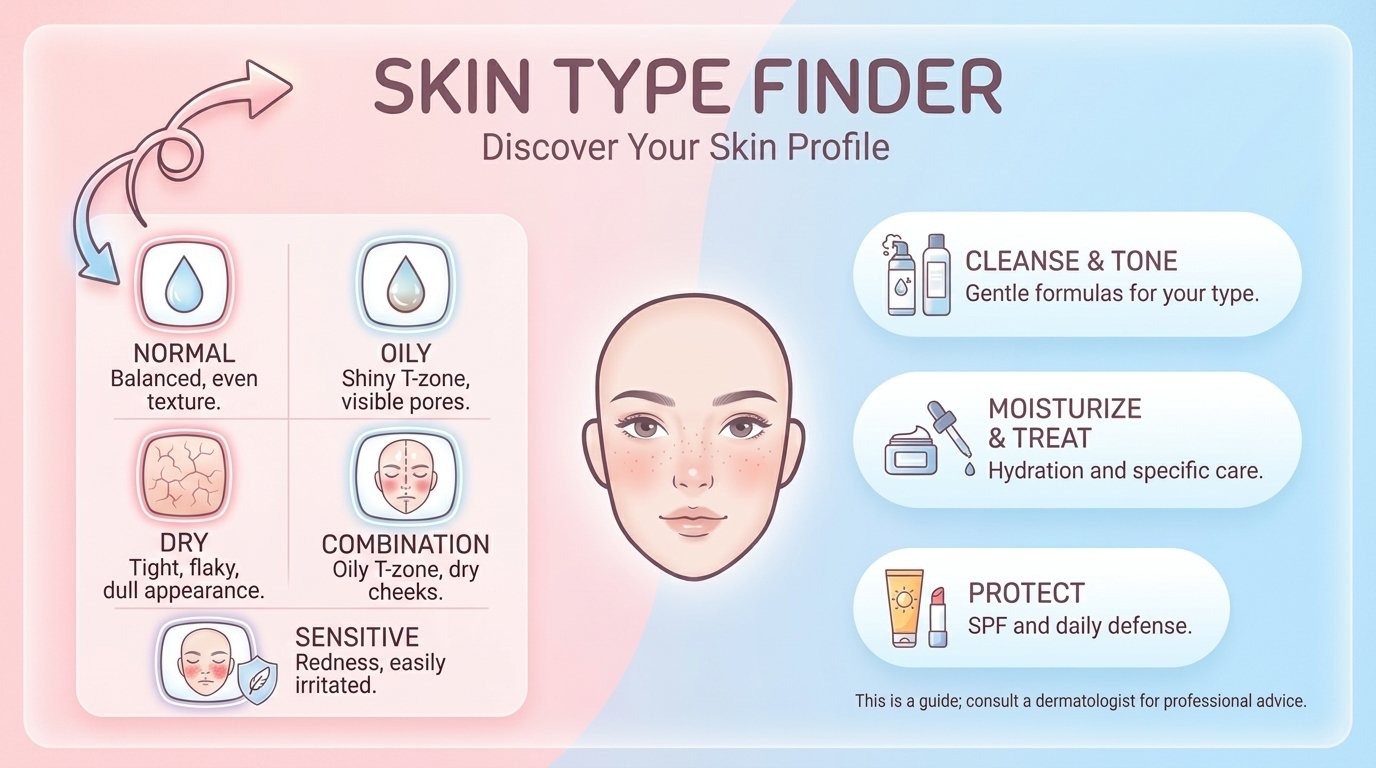
Loading the quiz…
How Our Skin Type Finder Works
The quiz looks at the signs dermatologists and skincare professionals commonly use to describe skin: how your skin feels after cleansing, how much shine you get during the day, how large your pores look, how often you break out and whether you get dry patches. Each answer adds points to one or more skin types, and the type with the most points is your result.
Sensitivity is handled separately. Sensitive skin is a tendency to react with stinging, redness or itching, and it can go along with any skin type, so two questions check for it. If your answers point that way, you will see an extra note with gentler-routine tips.
The finder is a guide, not a medical test. It gives you a good starting point for building a routine, and you can adjust from there based on how your skin responds.
How to Find Your Skin Type at Home
You can double-check the quiz at home with two simple tests. Both need only a mild cleanser, a clean towel and a little patience.
- The bare-face test. Wash your face with a gentle cleanser and pat it dry. Do not apply any moisturizer, serum or sunscreen. Wait 30 minutes to an hour, then look in a mirror in natural light. Tight or flaky skin suggests dry skin, a shiny face suggests oily skin, shine only on the forehead and nose suggests combination skin, and comfortable, matte skin suggests normal skin.
- The blotting paper test. Wait an hour after cleansing, then gently press a clean blotting sheet on your forehead, nose, cheeks and chin. If the sheet picks up lots of oil from every area, your skin is probably oily. If it picks up oil only from the forehead and nose, it points to combination skin. If it picks up very little, your skin is normal or dry.
- Note how your skin feels, not just how it looks. Tightness, itching and rough patches are clues to dry or sensitive skin that you cannot see on a shiny forehead. Pay attention to how your skin feels at the end of the day.
- Repeat the test on another day. Skin can look different after a late night, a hot shower or a change in weather. Do the test a second time on a calm day for a more reliable answer.
The Skin Types Explained
Each type below explains what it looks and feels like, a simple routine, ingredients that tend to help and what to go easy on. These are general guidelines to try, and your own skin is the best guide.
Normal Skin
What it looks like: Normal skin is balanced. It is neither very oily nor very dry, pores are small, breakouts are rare and the skin rarely reacts to products. It feels comfortable after washing and looks fresh through the day.
Routine: Cleanse gently, moisturize lightly and wear sunscreen every morning. A simple routine is usually enough, so avoid adding too many active ingredients at once.
Ingredients to look for: Gentle cleansers, a light moisturizer, antioxidants such as vitamin C, and sunscreen.
Go easy on: Over-exfoliating, skipping sunscreen and constantly changing products.
Dry Skin
What it looks like: Dry skin produces less natural oil. It often feels tight after washing, may look dull or rough and can flake, especially in cold or dry weather. Fine lines can look more noticeable when the skin lacks moisture.
Routine: Use a creamy cleanser with lukewarm water, apply a hydrating serum on slightly damp skin, then lock it in with a richer moisturizer. Wear sunscreen daily.
Ingredients to look for: Hyaluronic acid, glycerin, ceramides, squalane and shea butter.
Go easy on: Hot water, harsh foaming cleansers, alcohol-heavy toners and aggressive scrubs.
Oily Skin
What it looks like: Oily skin produces more sebum. The face looks shiny, often within a few hours of washing, pores can look larger and breakouts are more common. On the positive side, oily skin often shows fine lines later.
Routine: Use a gentle gel cleanser, a lightweight oil-free moisturizer and a gel or oil-free sunscreen. Treatments with niacinamide or low-strength salicylic acid can help control shine and clogged pores.
Ingredients to look for: Niacinamide, salicylic acid, hyaluronic acid and light, non-comedogenic moisturizers.
Go easy on: Skipping moisturizer, over-washing, harsh stripping cleansers and thick, greasy creams.
Combination Skin
What it looks like: Combination skin is oily in the T-zone (forehead, nose and chin) and normal or dry on the cheeks. It is one of the most common types, and it can be tricky because different areas need different care.
Routine: Use a gentle balanced cleanser and a light gel-cream. You can put treatments like niacinamide on the T-zone and a slightly richer cream on dry cheeks, a method often called zoning.
Ingredients to look for: Niacinamide, hyaluronic acid, glycerin and light gel-creams.
Go easy on: Very rich creams on the T-zone and harsh products that strip the cheeks.
Sensitive Skin
What it looks like: Sensitive skin is not a separate type but a tendency to react. It can sting, burn, turn red or feel itchy after using certain products or in changing weather. It can go together with dry, oily, combination or normal skin.
Routine: Keep the routine short and gentle: a mild fragrance-free cleanser, a soothing moisturizer and sunscreen. Introduce one new product at a time and patch test it first.
Ingredients to look for: Ceramides, glycerin, panthenol, colloidal oatmeal and mineral sunscreens with zinc oxide.
Go easy on: Fragrance, strong exfoliants, high-strength acids and many new products at the same time.
Skin Type Comparison Chart
Use this chart to compare the types side by side.
| Skin type | After washing | By midday | Pores | Best texture |
|---|---|---|---|---|
| Normal | Comfortable | Fresh, little shine | Small | Light lotion |
| Dry | Tight or flaky | Matte or dull | Barely visible | Rich cream |
| Oily | Shiny or greasy | Shiny all over | Large and visible | Oil-free gel |
| Combination | Mixed: oily T-zone, drier cheeks | Shine in the T-zone | Larger in the T-zone | Gel-cream |
| Sensitive | Can sting or itch | May look red or blotchy | Varies | Fragrance-free cream |
A Simple Skincare Routine for Any Skin Type
Whatever your skin type, a good routine comes down to three simple steps, done consistently. What changes between skin types is the texture and the ingredients you choose.
- Cleanse. Wash your face once or twice a day with a gentle cleanser. Cleansing removes dirt, excess oil, sunscreen and makeup. Oily skin often does well with a gel cleanser, and dry skin with a cream or milk cleanser.
- Moisturize. Every skin type needs moisture, including oily skin. The difference is the texture: gel for oily skin, lotion or gel-cream for combination and normal skin, and richer cream for dry skin.
- Protect. Use sunscreen of SPF 30 or higher every morning, even on cloudy days. Sun protection is the most important step for healthy skin in the long term, and it matters for every skin type.
Skin Type vs Skin Condition: What Is the Difference?
Skin type and skin condition are not the same thing. Skin type describes how much oil your skin tends to produce and how it behaves day to day. A skin condition, such as dehydration, acne, eczema or rosacea, can change over time or may need treatment.
One example is dry skin versus dehydrated skin. Dry skin lacks oil and is a skin type, while dehydrated skin lacks water and is a temporary condition that can affect any skin type, even oily skin. If your oily skin feels tight in places, dehydration may be the reason, and a hydrating serum can help.
If you have persistent acne, painful or itchy rashes, red patches that do not go away, or any change in a mole or skin spot, please talk to a doctor or dermatologist. A quiz cannot diagnose a skin condition.
Can Your Skin Type Change?
Your skin type can shift over time. Hormones, age, medication, climate, stress, sleep and the products you use all play a part. Many people notice drier skin in winter and oilier skin in humid summers, and skin often becomes drier with age.
That is why it is worth repeating the quiz every few months, or whenever your skin starts behaving differently. If your routine used to work and now feels wrong, your skin may have changed.
Tips for an Accurate Skin Type Result
- Test your skin on a normal day, not after a long flight, a hot shower or a skincare treatment.
- Use a gentle cleanser for the bare-face test, because harsh cleansers can make any skin feel tight.
- Look at your skin in natural light, where shine and dryness are easier to see.
- Check your skin at the end of the day as well, not only after cleansing.
- Take the quiz twice. If you get the same result both times, you can trust it.
- Pay attention to your cheeks, forehead, nose and chin separately, since combination skin is easy to miss.
Common Skincare Mistakes to Avoid
- Assuming oily skin does not need moisturizer. Skipping moisturizer can leave skin dehydrated, and some skin then produces even more oil. Choose a light gel instead of nothing.
- Over-washing and over-exfoliating. Scrubbing and washing too often damages the skin barrier and can cause dryness, redness and breakouts, especially in sensitive skin.
- Using too many new products at once. If your skin reacts, you will not know which product caused it. Add one new product at a time and give it a few weeks.
- Skipping the patch test. Test any new product on a small area, such as your inner arm or jawline, for a few days before putting it on your whole face.
- Skipping sunscreen. Sunscreen is essential for every skin type, including oily skin and darker skin tones. Choose a texture you enjoy, so you actually use it every day.
- Choosing products by hype instead of skin type. A popular product is not right for everyone. Match texture and ingredients to your own skin type.
Skin Type Finder FAQ
What is my skin type?
Your skin type describes how much oil your skin produces and how it behaves. The four common types are normal, dry, oily and combination, and sensitivity can go along with any of them. The quickest way to find yours is to take the skin type finder quiz on this page, or to do the bare-face test at home.
Is the skin type finder free, and do I need a photo?
Yes, the skin type finder is free and does not need a photo or an account. You just answer seven questions, and the quiz runs in your browser.
How accurate is the skin type quiz?
The quiz is a helpful general guide, not a medical test. It depends on how you describe your skin, so answer based on how your skin behaves on a typical day. If you are unsure, repeat the quiz on another day or try the at-home tests above.
Is sensitive skin a skin type?
Sensitive skin is usually described as a tendency to react rather than a separate type. It can go along with dry, oily, combination or normal skin, so it is shown as an extra note in your quiz result.
Can my skin type change?
Yes. Age, hormones, climate, stress and skincare habits can all change how your skin behaves. Many people have drier skin in winter and oilier skin in summer, so it is worth checking again every few months.
What is the difference between dry skin and dehydrated skin?
Dry skin is a skin type that lacks oil. Dehydrated skin lacks water and is a temporary condition that can affect any skin type, even oily skin. Dehydrated skin often feels tight and looks dull, and a hydrating serum and a good moisturizer can help.
How do I know if my skin is combination?
If your forehead, nose and chin get shiny while your cheeks feel normal or dry, you probably have combination skin. The blotting paper test can help: it shows oil mostly from the T-zone if your skin is combination.
Do I need a different routine for each skin type?
The basics are the same for everyone: cleanse, moisturize and protect with sunscreen. What changes is the texture and the ingredients, such as a gel moisturizer for oily skin and a richer cream for dry skin.
This guide offers general skincare information, not medical advice. If you have painful, persistent or worsening skin problems, or you are unsure about a product, please speak to a doctor or dermatologist.